How to Practise Roulette for Free: A 30-Minute Plan That Actually Teaches You Something
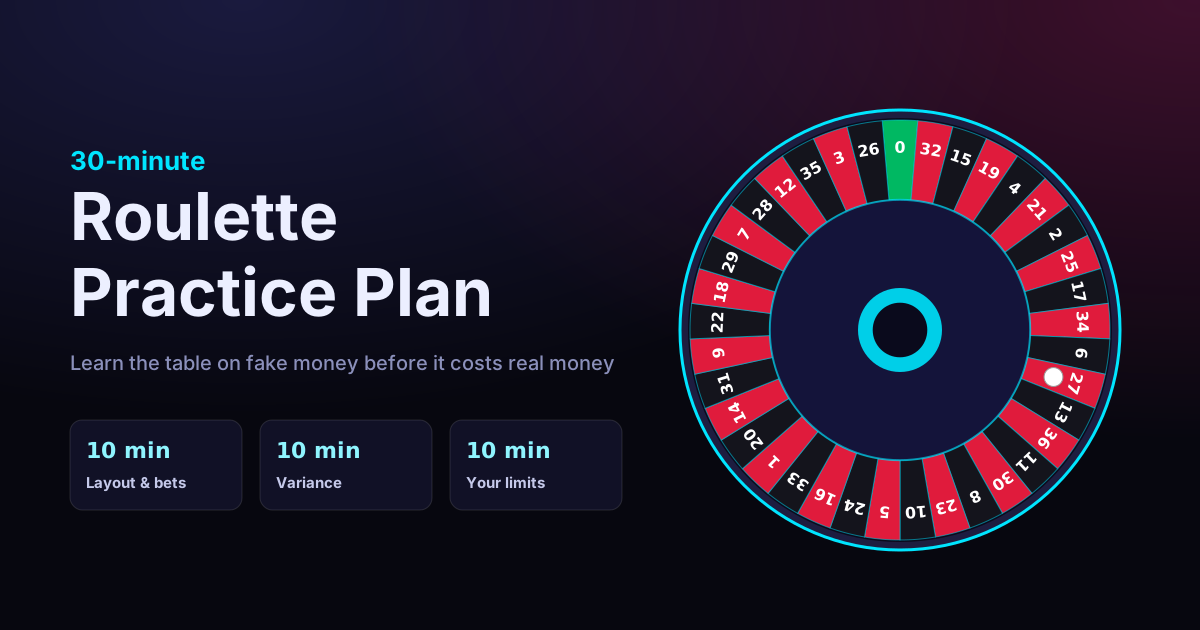
Most people learn roulette at a real table, which is the most expensive classroom in the building. The lessons themselves — how the layout works, what variance feels like, how fast money moves — do not need real stakes to teach. Here is a structured half hour on free demos that covers all of it.
What you need: a browser and thirty minutes. Every step below uses a free tool on this site — no account, no download, and the 10,000 credits in the header are virtual and reset with one click. Nothing you do here can cost or win real money.
Why practise a game of pure chance?
There is no skill in roulette that changes the odds. Every spin is independent, every bet on a single-zero wheel costs the same 2.70% of what you stake, and nothing you learn will move that number. So why practise at all?
Because the things that cost roulette players money are almost never the odds. They are mechanical mistakes — placing a split where you meant a straight-up, reaching for the American table because it had the lower minimum, misreading which bets la partage covers. They are pacing mistakes — playing three hundred spins an hour on auto when fifty would have been as much fun. And above all they are expectation mistakes: being surprised by a run of twelve blacks, or by how fast a bankroll moves when the stake doubles after every loss.
All three are learnable, and all three are cheaper to learn on fake money. A practice session does not make you a better gambler in the sense of winning more. It makes you a better-informed one, which mostly means losing less and less often being surprised.
Minutes 0–10: learn the table until it is boring
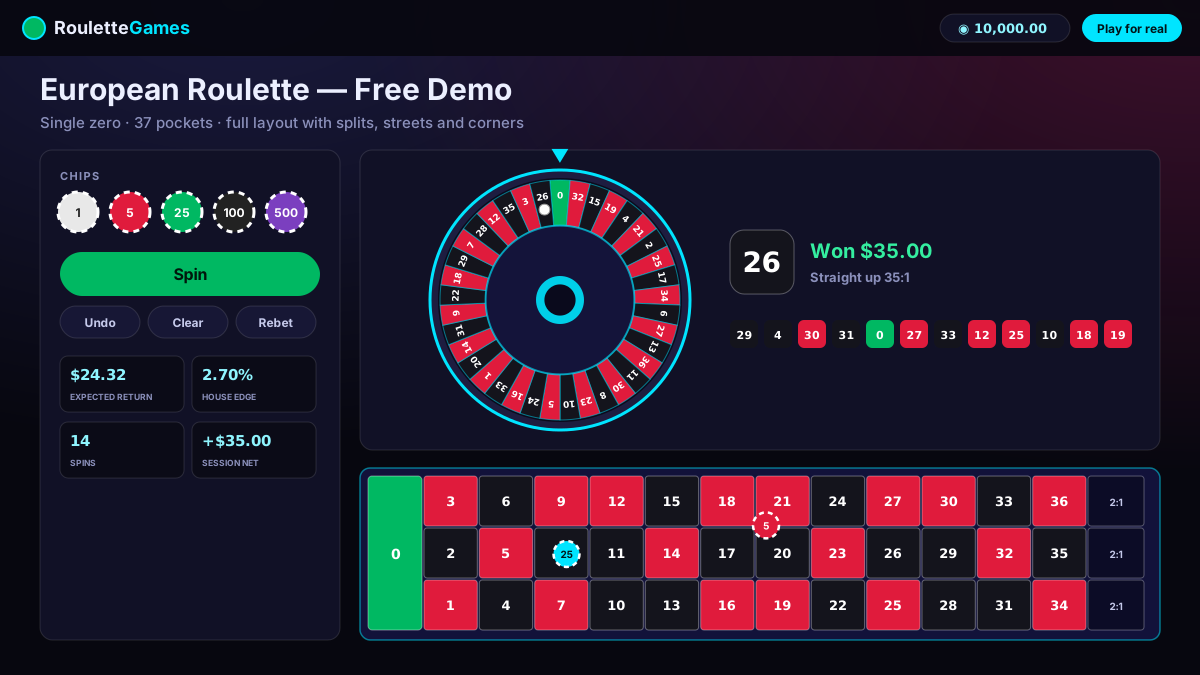
Open the European roulette demo. European first, always — it is the reference version of the game, and everything else is a modification of it.
Place one of every bet
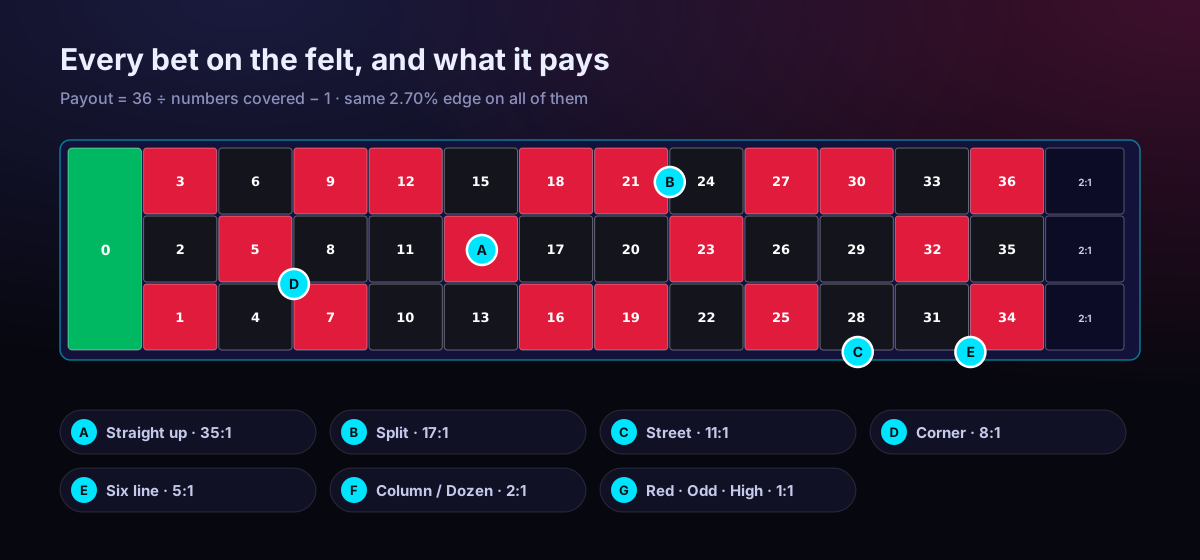
Pick the 1-credit chip and put one chip on each bet type in turn: a straight-up on any number, a split on the line between two numbers, a street on the bottom edge of a column of three, a corner where four numbers meet, a six line, a dozen, a column, and red. Watch the Expected return and House edge readouts in the panel as you go.
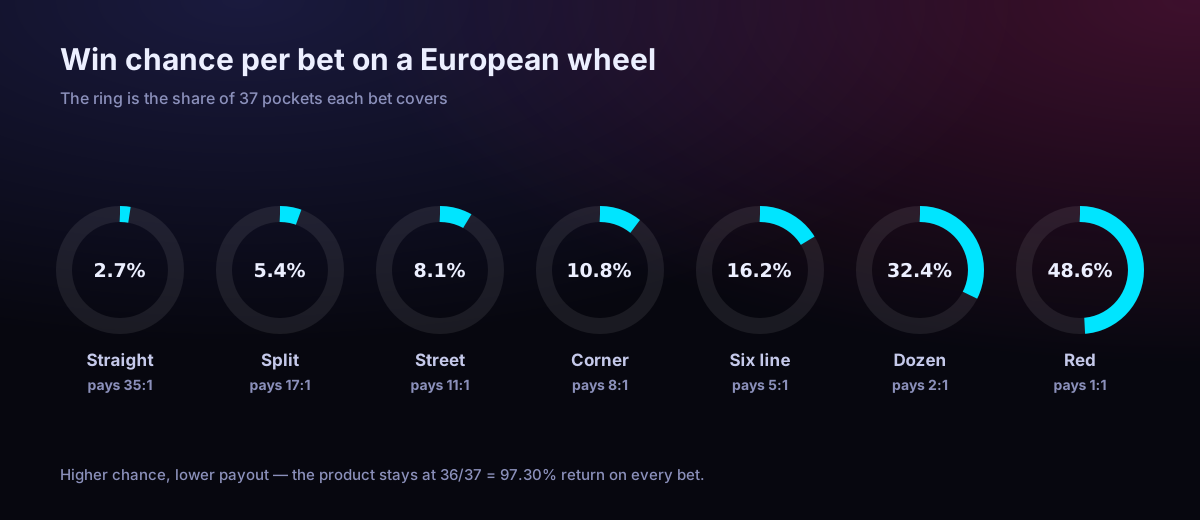
The point of the exercise is the edge readout. Add a straight-up: 2.70%. Add a corner: still 2.70%. Add a dozen: 2.70%. However you build the board, the figure does not move — because every bet is priced from the same formula, 36 ÷ numbers covered − 1, against a wheel with 37 pockets. Once you have watched that happen with your own clicks, the claim that some bets are "better" stops being persuasive.
Then switch wheels
Open the American demo and build the same board. Same payouts, same layout — and an edge readout of 5.26%. Then open French, put chips on red and even, and watch the even-money edge drop to 1.35% because of la partage. Three wheels, three prices for an identical board. That is the single most valuable fact in roulette, and you now know it from observation rather than from being told.
If any of the bet names are unfamiliar, keep the rules guide open in another tab. If you want the full probability table for each wheel side by side, it is in the odds and payouts guide.
Minutes 10–20: feel what variance actually looks like
This is the part people skip and should not. Most real-money roulette regret comes from misjudging how swingy the game is, in both directions.
Watch fifty spins of nothing
Open the wheel simulator and spin it fifty times without betting. Keep an eye on the session stats — red rate, black rate, zero rate. The long-run figures are 48.65%, 48.65% and 2.70%. Over fifty spins you will almost certainly see something very different: a red rate of 40% or 58%, zero three times or not at all, a streak of six or seven of one colour.
None of that means anything. That is the lesson. A truly random sequence is lumpier than intuition expects, and every pattern you see in fifty spins — "red is hot", "zero is due" — is the brain finding structure in noise. Seeing it happen on a simulator, where you know the draw is a uniform cryptographic random number with no memory, is the most reliable cure for the gambler's fallacy we know of.
Then bet two different ways
Back on the European demo, reset your balance and play twenty spins of 10 credits on red. Note the session net. Reset again and play twenty spins of 10 credits straight up on a single number. Note that too.
Same edge, same expected loss: about 5.4 credits over 20 spins in both cases. Completely different experiences. The red session hovers near zero, drifting gently. The straight-up session is usually a slow bleed of −10, −20, −30 … punctuated, if you are lucky, by a single +350 that swings you far into profit. Neither is a better bet. They are different rides at the same price, and it is worth knowing in advance which one you enjoy before a real table makes you find out.
Minutes 20–30: put a number on what a real session would cost
The last ten minutes turn the experience into figures you can carry to a real table.
Cost per hour
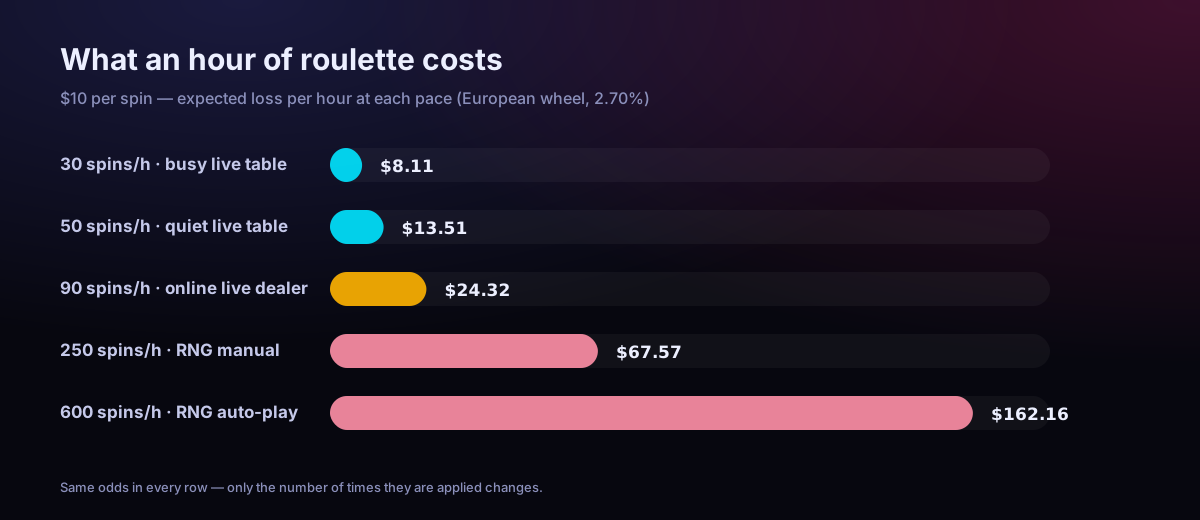
Open the session cost calculator and enter what you would realistically play: your bet size, how many spins an hour (a live table runs 30–50; RNG roulette can run 250 or more), and how long a session lasts. The headline figure is the expected cost per hour.
At $10 a spin on a European wheel, fifty spins an hour costs about $13.51. Switch to auto-play at 600 spins an hour and the same $10 stake costs $162 an hour. The odds did not change. The number of times they were applied did. Of all the numbers in this exercise, cost per hour is the one most worth remembering, because it is the one that decides whether a night of roulette is a reasonable entertainment expense or a quietly expensive habit.
Bankroll survival
Then open the bankroll calculator and enter a bankroll and a win target — say $500 and a target of $500 profit. The calculator uses the gambler's-ruin formula, and on a European wheel at $10 a bet it returns roughly a 6% chance of doubling before going broke. Lower the target to $50 and the chance of reaching it jumps to around 75%.
This is not an edge. It is the shape of a negative-expectation game: small targets are usually reached and large ones rarely are, and the rare losses are big enough to make the average a loss. Seeing those two numbers side by side is the best preparation there is for deciding, before a session, what "a good night" means.
Write down your limit
Finish by writing two numbers on paper: the most you will spend in a session, and the point at which you will stop if you are ahead. Then close the tab. The decision about when to stop should be made by the calm version of you, not the one who has just lost three spins in a row and wants it back.
After the half hour
If you have done all three blocks, you know more about how roulette costs money than most people who play it for real. A few optional follow-ups, depending on what caught your interest:
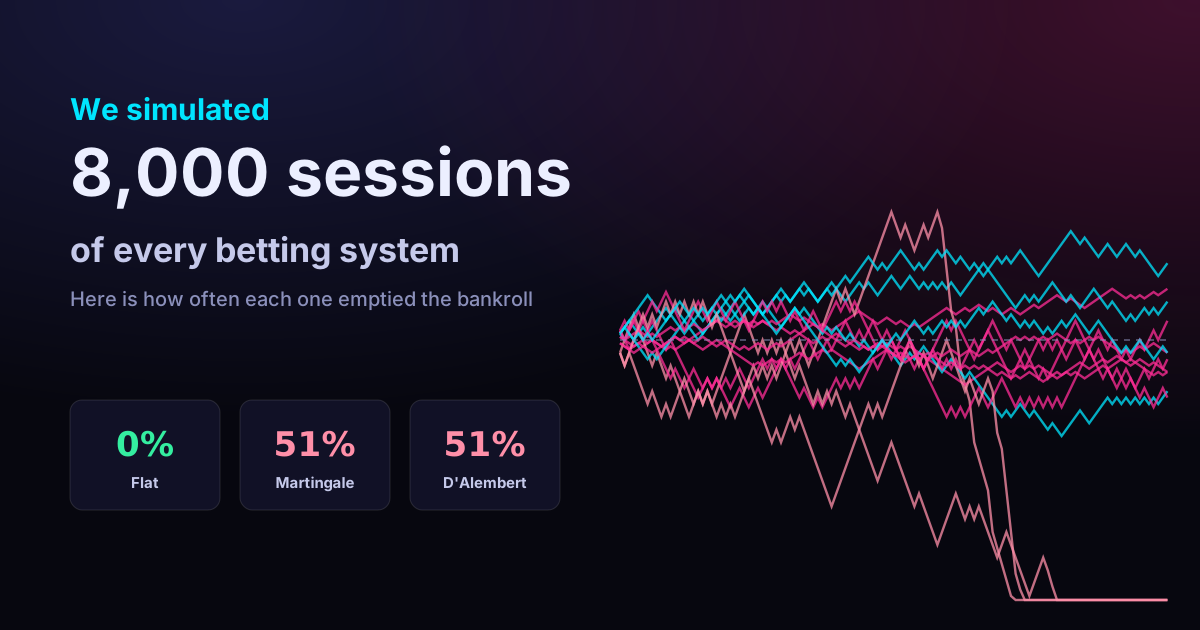
- Curious about systems? Run Martingale through the strategy simulator at your realistic bankroll and table limit, then read what 8,000 simulated sessions showed.
- Want the full racetrack? The French demo has voisins, tiers, orphelins and jeu zéro as one-click call bets. The wheel layout guide explains which pockets each one covers.
- Like big multipliers? Lightning shows exactly what the 500× trade costs: straight-ups pay 29:1 instead of 35:1, and the edge creeps to about 2.90%.
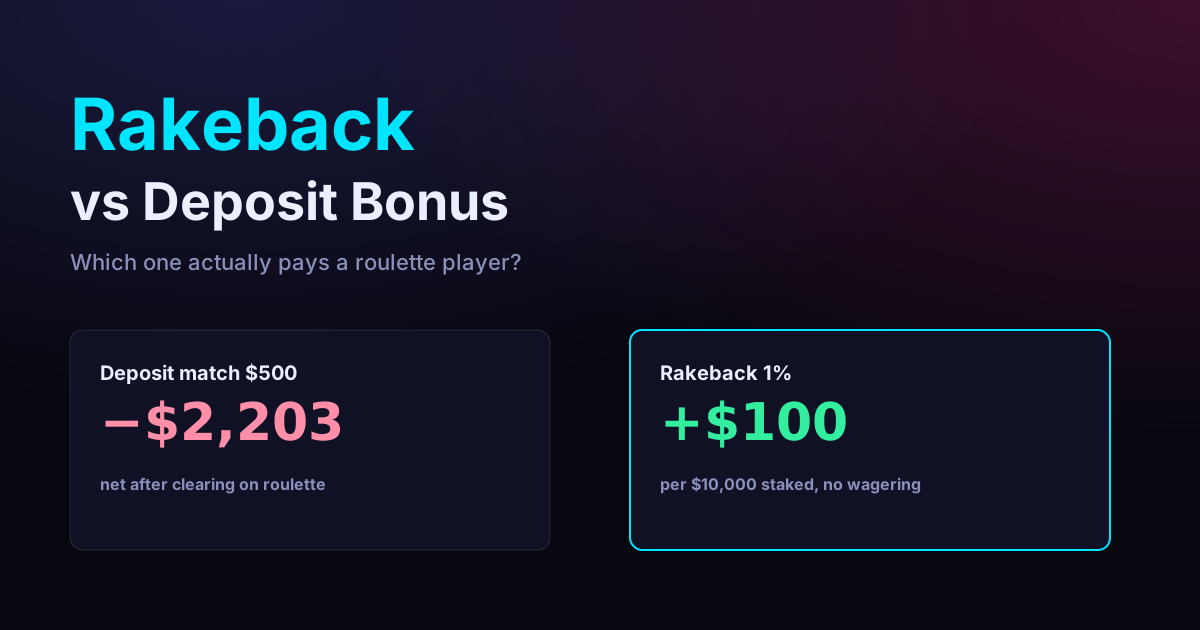
- Thinking about a real casino? Read rakeback vs deposit bonus first. For roulette specifically, the headline match bonus is very often the worse deal.
Five mistakes the practice session is designed to prevent
- Sitting at a double-zero table by accident. Lobbies list European and American side by side. The 00 on the layout is the tell, and it doubles the cost of every bet. See European vs American.
- Believing a bet type is "safer". Covering more numbers wins more often and pays less. The edge is identical — the payout calculator proves it for any board you build.
- Playing at auto-play pace. Ten times the spins is ten times the expected loss per hour, for the same entertainment.
- Reading the scoreboard. The last-numbers display is decoration. Fifty spins on the simulator are enough to see that streaks are normal and meaningless.
- Deciding the stop point mid-session. Set it before the first spin. The responsible gambling page covers the tools every licensed operator offers for enforcing it.
Frequently Asked Questions
Can practising on free roulette improve my odds?
No. Roulette has no skill element that changes the odds; every spin is independent and the house edge is fixed by the wheel. What practice improves is everything around the odds — choosing the cheaper wheel, avoiding mechanical mistakes, pacing, and knowing what variance feels like before it costs money.
Are free roulette demos the same as real ones?
Ours use the real pocket orders, the standard paytables and a uniform random draw, so the odds, payouts and house edge are identical to a real single-zero or double-zero table. What differs is that nothing is at stake — which is the point, and also why a winning demo session predicts nothing about a real one.
How long should I practise before playing for real?
The 30-minute plan above covers everything that matters. Beyond that, extra practice teaches nothing new about the odds. If you find yourself practising to "get ready" for a win, that is a signal worth paying attention to.
Which roulette variant should a beginner practise?
European first — it is the reference game. Then French, because la partage makes it the cheapest table for even-money bets. Try American only to see why to avoid it.
More from the blog
18+. Roulette has a fixed house edge, so over enough spins the maths favours the operator — always. If you play for real, treat it as money spent on entertainment, set a limit before you start and stop when you reach it. Our responsible gambling page covers the warning signs and where to get free, confidential help.